
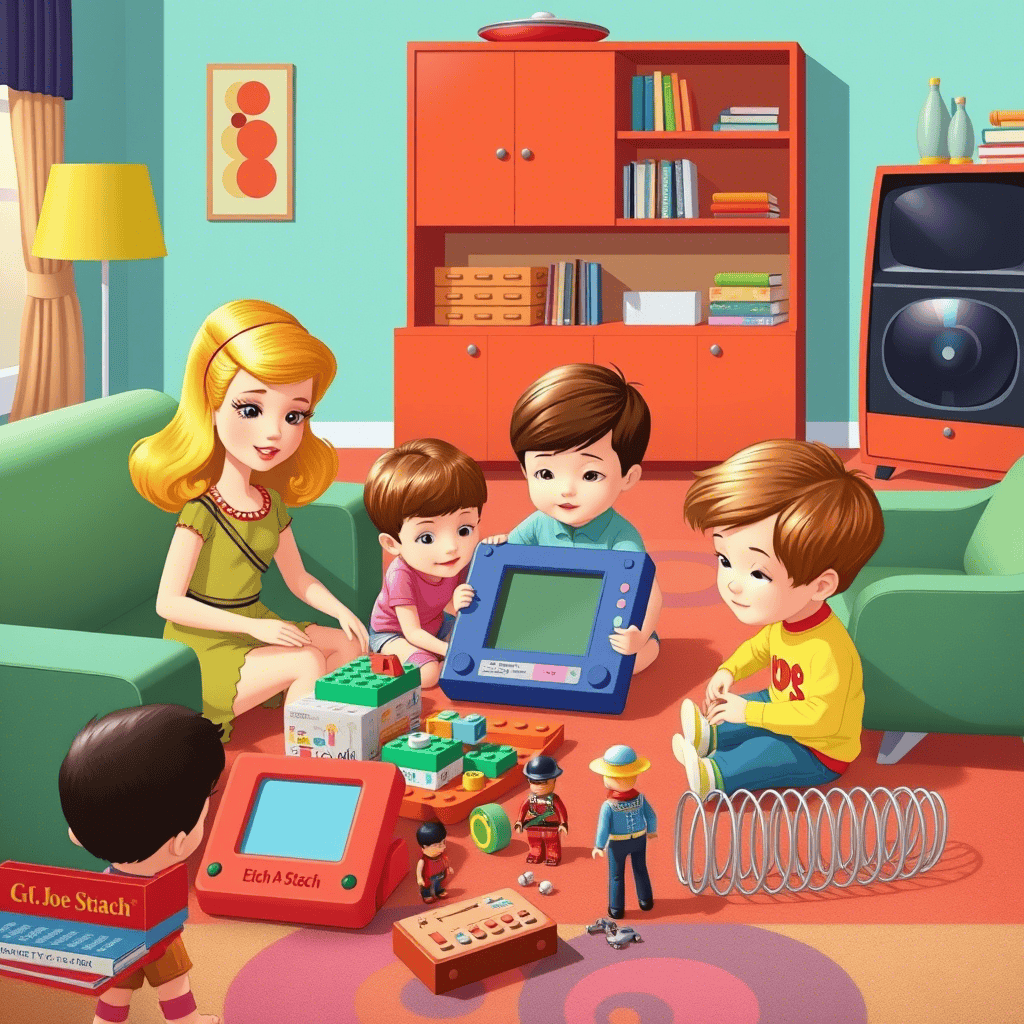
Step back in time and rediscover the toys and games that defined childhood in the 1960s! This engaging quiz transports you to a world of classic playthings, from iconic dolls and action figures to beloved board games and outdoor adventures. Furthermore, you’ll explore the cultural impact of these toys, learning how they reflected the trends and values of the era. Consequently, whether you grew up in the ’60s or simply appreciate retro nostalgia, this quiz offers a delightful trip down memory lane. Challenge your knowledge of these cherished playthings and uncover fascinating trivia about the toys that sparked imaginations and created lasting memories for a generation.
Moreover, this quiz isn’t just about testing your memory; it’s a celebration of play itself. Each question illuminates the ingenuity and creativity behind these timeless toys and games. For instance, you might recall the thrill of racing slot cars, the strategic thinking required for board games, or the imaginative worlds brought to life by dolls and action figures. Ultimately, this quiz provides a fun and educational experience for everyone, from seasoned collectors to casual enthusiasts. So, gather your friends and family, and embark on a nostalgic journey through the playtime favorites of the 1960s!
#1. What year was the Barbie doll first introduced?
#2. In what decade did LEGO begin producing its iconic plastic interlocking bricks?
#3. Which toy, invented in the 1960s, allows users to draw by turning knobs?
#4. G.I. Joe, one of the first action figures, was released in which year?
#5. Which classic board game became a household staple in the 1960s?
#6. When were Hot Wheels cars first launched?
#7. What type of toy are Rock’Em Sock’Em Robots?
#8. The Easy-Bake Oven, allowing kids to bake real food, debuted in what year?
#9. Originally, how did children create Mr. Potato Head’s face?
#10. What feature made Chatty Cathy unique when it was released in the 1960s?
#11. The modern Frisbee gained popularity after being marketed under what name in the 1960s?
#12. Silly Putty was originally created during World War II as a substitute for what material?
#13. What skill does the Operation game primarily test?
#14. The View-Master, known for its 3D reels, became especially popular in the 1960s due to partnerships with what industry?
#15. How many feet can a Slinky walk down stairs if unobstructed?
Results


Related Quizzes
1960s Movie Trivia: Test Your Knowledge of Iconic Films
1960s NFL Trivia: 15 Questions on Legends, Super Bowls & More!
Related Articles
The Amazing Career of Bob Newhart. A comedy Genius
Answer Explanations:
1. What year was the Barbie doll first introduced?
Correct Answer: 1959
Explanation: Barbie made her debut at the American International Toy Fair in New York City in 1959, revolutionizing the toy industry with her adult-like figure and fashionable outfits.
2. In what decade did LEGO begin producing its iconic plastic interlocking bricks?
Correct Answer: 1950s
Explanation: Although LEGO started in the 1930s, their signature plastic interlocking bricks were perfected in the late 1950s, setting the stage for endless creative possibilities.
3. Which toy, invented in the 1960s, allows users to draw by turning knobs?
Correct Answer: Etch A Sketch
Explanation: Etch A Sketch, invented by André Cassagnes, became a huge hit upon its release in 1960, captivating kids with its unique drawing mechanism.
4. G.I. Joe, one of the first action figures, was released in which year?
Correct Answer: 1964
Explanation: G.I. Joe, created by Hasbro, revolutionized the toy market in 1964 as one of the first action figures, appealing to boys with its military-themed adventures.
5. Which classic board game became a household staple in the 1960s?
Correct Answer: Twister
Explanation: Twister, introduced in 1966, became famous for its physical challenges and colorful mat design, making it a must-have party game.
6. When were Hot Wheels cars first launched?
Correct Answer: 1968
Explanation: Mattel launched Hot Wheels in 1968, quickly becoming a favorite among car enthusiasts with their sleek designs and imaginative themes.
7. What type of toy are Rock ‘Em Sock ‘Em Robots?
Correct Answer: Mechanical boxing robots
Explanation: These mechanical robots allowed players to simulate boxing matches using levers, creating hours of competitive fun.
8. The Easy-Bake Oven, allowing kids to bake real food, debuted in what year?
Correct Answer: 1963
Explanation: The Easy-Bake Oven, powered by incandescent light bulbs, let kids bake small cakes and cookies safely, sparking culinary creativity.
9. Originally, how did children create Mr. Potato Head’s face?
Correct Answer: Using real potatoes
Explanation: Before the plastic potato base existed, children used actual potatoes to assemble faces, adding a playful twist to mealtime leftovers.
10. What feature made Chatty Cathy unique when it was released in the 1960s?
Correct Answer: Pull-string talking
Explanation: Chatty Cathy’s pull-string mechanism let her say phrases like “I love you” and “Let’s play school,” making her a beloved interactive companion.
11. The modern Frisbee gained popularity after being marketed under what name in the 1960s?
Correct Answer: Wham-O Frisbee
Explanation: Marketed by Wham-O, the Frisbee soared in popularity thanks to college campuses and outdoor fun, becoming a cultural phenomenon.
12. Silly Putty was originally created during World War II as a substitute for what material?
Correct Answer: Rubber
Explanation: Developed during WWII as a synthetic rubber replacement, Silly Putty found success as a novelty item with its stretchy, bouncy properties.
13. What skill does the Operation game primarily test?
Correct Answer: Hand-eye coordination
Explanation: Operation requires steady hands to remove tiny plastic pieces without triggering the buzzer, testing precision and focus.
14. The View-Master, known for its 3D reels, became especially popular in the 1960s due to partnerships with what industry?
Correct Answer: Film/TV
Explanation: Partnering with Disney and other studios, View-Master brought beloved characters and scenes to life, captivating audiences with immersive storytelling.
15. How many feet can a Slinky “walk” down stairs if unobstructed?
Correct Answer: About 80 feet
Explanation: A Slinky can travel approximately 80 feet if given enough space and momentum, showcasing its simple yet mesmerizing physics.
